


How do air quality stations contribute to public health?
Air quality stations contribute to public health by providing real-time data on air pollutants, enabling timely actions to reduce exposure and mitigate health risks associated with poor air quality.
How often is the information from air quality stations sent?
Information from air quality stations is sent every 15 minutes
What are air quality stations?
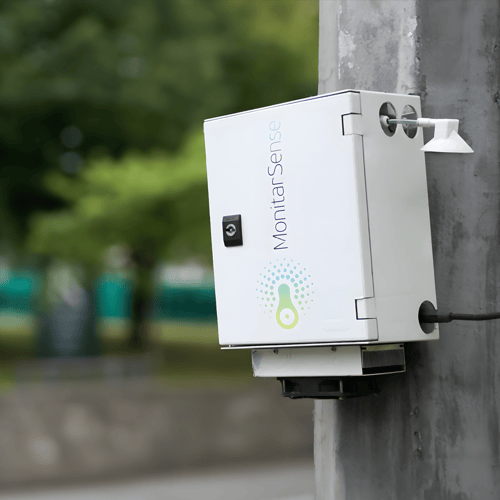
Air quality stations are small units that can be installed on street furniture such as lampposts, bollards, and shelters to monitor various air quality parameters.
What parameters do air quality stations monitor?
Air quality stations monitor the following parameters:
- Ozone (O3)
- Nitrogen dioxide (NO2)
- Carbon monoxide (CO)
- Particulates (PM10 and PM2.5)
Does the measurement frequency affect the data transmission interval of the air quality stations?
No, the data transmission interval is every 15 minutes regardless of the measurement frequency.